


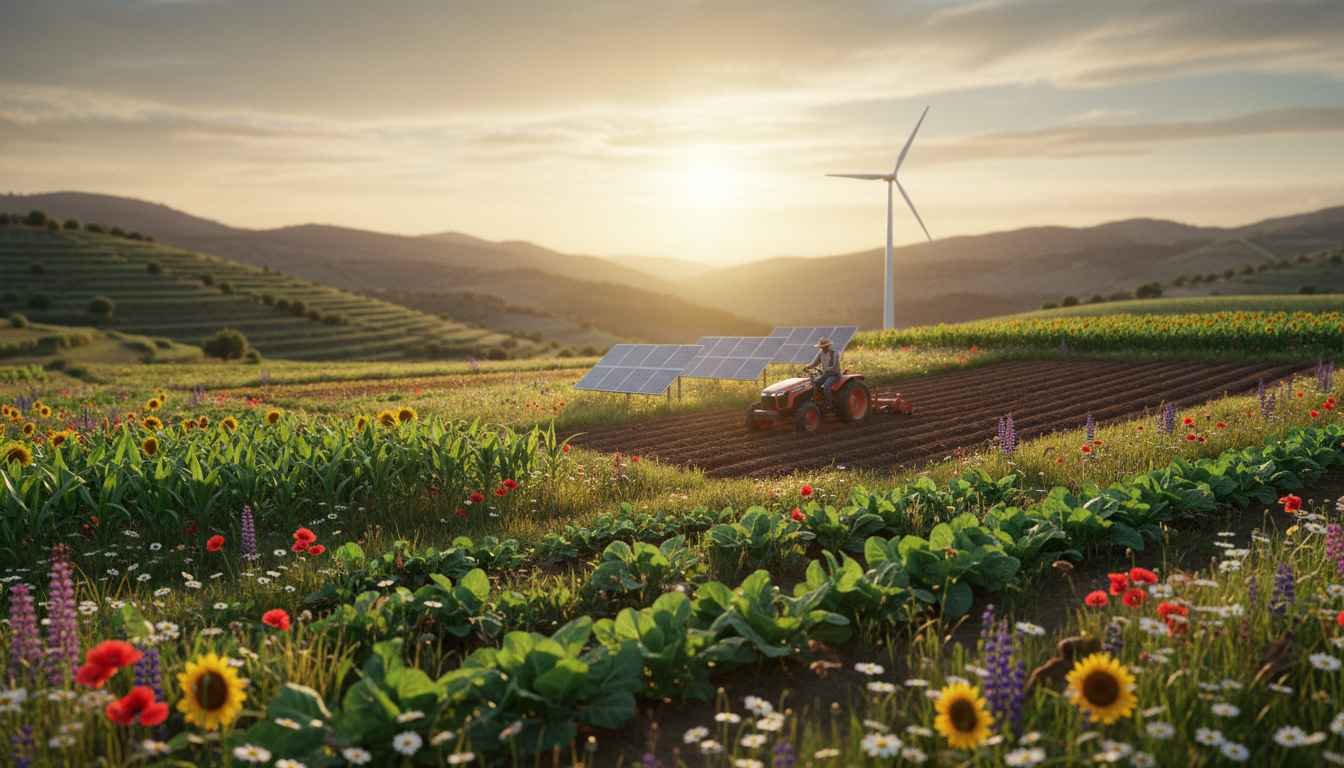
Good news and bad news. The good news is that agriculture has the potential to support vibrant ecosystems and restore environmental balance. The bad news is that conventional practices often degrade soil, harm biodiversity, and accelerate climate change. As a behavioral economist turned environmental advocate, I’ve witnessed firsthand how choices on the farm ripple through local and global ecosystems. Early in my career, I supported policies incentivizing monocultures without fully grasping their ecological consequences – a mistake that taught me the importance of holistic assessment.
1. Regenerative Agriculture
At the top of the list is regenerative agriculture. This practice emphasizes soil health, crop diversity, and natural pest management. By integrating cover crops, crop rotations, and minimal tillage, regenerative methods can sequester carbon, enhance water retention, and improve biodiversity. Studies show that regenerative farms can store up to 1.5 metric tons of carbon per hectare annually, helping mitigate climate change while increasing long-term productivity.
Best For: Farms aiming to enhance soil health, reduce chemical inputs, and build resilient food systems.
Not Recommended For: Highly mechanized industrial farms lacking flexibility for rotational planting.
2. Organic Farming
Organic agriculture reduces synthetic chemical use and emphasizes natural fertilizers. This approach supports pollinators and soil microbes while reducing water contamination. Though yields can sometimes be lower than conventional systems, the long-term benefits to ecosystem stability and human health are significant. Implementing organic standards requires careful planning, but it aligns well with consumer trends toward sustainable food.
Best For: Small to medium farms with access to local markets and a commitment to environmental stewardship.
Not Recommended For: Large-scale monocultures struggling to meet high-volume demands.
3. Agroforestry
Agroforestry integrates trees with crops or livestock, creating multiple ecological layers. This method reduces erosion, enhances biodiversity, and provides shade and wind protection for crops. Trees act as carbon sinks and can improve microclimates, contributing to climate resilience. I’ve personally visited agroforestry sites where introducing native tree species transformed once-degraded lands into thriving habitats for birds and insects.
Best For: Farms in vulnerable landscapes needing soil stabilization and biodiversity restoration.
Not Recommended For: Farms dependent solely on high-yield monoculture outputs with limited land area.
4. Precision Agriculture
Precision agriculture uses technology to optimize inputs like water, fertilizer, and pesticides. While this reduces waste and can improve crop efficiency, it depends heavily on access to sophisticated tools and data analysis. Precision practices alone do not guarantee ecosystem health but can complement regenerative or organic methods. Integrating technology wisely prevents overuse of resources and minimizes environmental harm.
Best For: Medium to large-scale operations with investment capacity in sensors and software.
Not Recommended For: Smallholder farms without technical support or training.
5. Conventional Monoculture
Monoculture remains the most widespread practice but ranks lowest in terms of environmental impact. Planting a single crop extensively can lead to soil degradation, pest outbreaks, and reduced biodiversity. Reliance on chemical fertilizers and pesticides can contaminate waterways and disrupt local ecosystems. While short-term yields may appear high, the long-term environmental costs are severe. Learning from my early policy work, I now understand that prioritizing immediate economic gain over ecological balance is a critical error we must avoid.
Best For: Farmers needing high short-term productivity for staple crops.
Not Recommended For: Anyone seeking long-term sustainability or ecosystem preservation.
Potential Drawbacks and Who Should Avoid Certain Practices
While regenerative, organic, and agroforestry practices are environmentally beneficial, they require investment in knowledge, labor, and sometimes upfront costs that not all farmers can bear. Precision agriculture is powerful but may widen the technology gap between small and large farms. Conventional monocultures, despite high yields, contribute heavily to climate change and biodiversity loss. Being honest about these trade-offs allows for more informed decision-making at the farm and policy levels.
In assessing agriculture ecosystems & environment, it becomes clear that the most sustainable approaches integrate biodiversity, minimize chemical inputs, and focus on long-term soil health. These practices benefit not only the immediate farm but the surrounding landscapes and communities. For ongoing research, policy updates, and deeper environmental analysis, resources like Grist provide a wealth of context and insights.
