


In today’s rapidly advancing world, students need to be equipped with the skills that are not just relevant but essential for future success. Science, technology, engineering, and mathematics – collectively known as STEM – are the cornerstones of a competitive, knowledge-based economy. Yet, despite their importance, STEM education often remains elusive, reserved for students who have the resources and support to access these critical areas of learning. This is where creative STEM projects come into play. They’re changing the landscape of education, making science and technology more accessible, engaging, and practical for students of all backgrounds. If you haven’t yet integrated these kinds of projects into your curriculum, you risk falling behind – both as an educator and as a student. This article is your ultimate guide to understanding how STEM can be democratized and why you can’t afford to miss out on this movement that is reshaping education for the better.
The Power of Hands-On STEM Projects
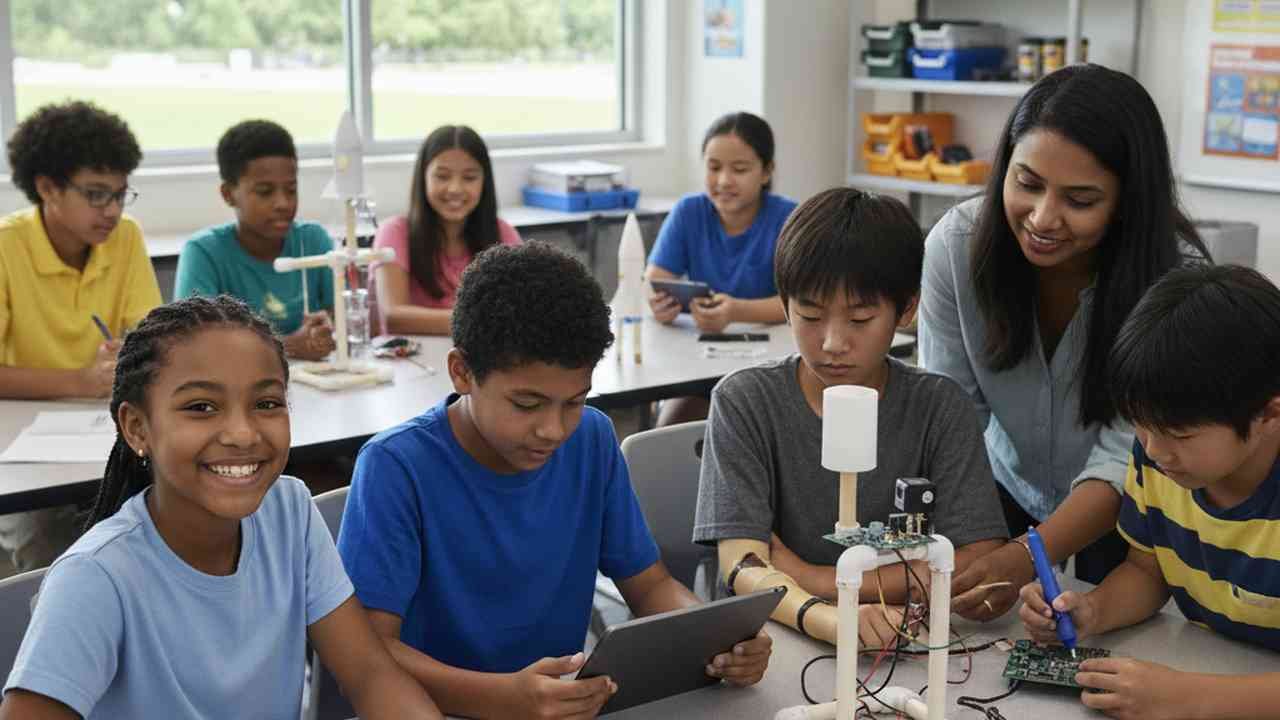
When it comes to teaching complex scientific and technological concepts, traditional methods of instruction often fall short. Students may struggle to grasp abstract concepts when they’re presented in a dry, theoretical format. This is where hands-on STEM projects make all the difference. Imagine a group of students working together, soldering components for a robot, programming it to perform a specific task, and feeling the rush of excitement as their creation comes to life. This experiential learning approach brings the abstract into the tangible, igniting curiosity and sparking a deeper understanding of the material. Hands-on STEM activities can be as simple as building a solar-powered car or as complex as designing an artificial intelligence algorithm. The beauty lies in their accessibility: No matter the budget, any classroom can implement creative STEM projects that leave a lasting impact on students.
Breaking Down Barriers to STEM Education
One of the biggest challenges to STEM education today is its accessibility. Students in underfunded schools or from disadvantaged backgrounds often miss out on high-quality science and technology education. This inequity can create a gap that is difficult to bridge. However, creative STEM projects have the potential to level the playing field. With minimal resources, students can engage in meaningful projects that teach problem-solving, critical thinking, and collaboration. Consider a project like building a homemade telescope using low-cost materials, which allows students to learn about optics, physics, and astronomy. Not only is this project inexpensive, but it also makes complex scientific concepts accessible to students who might not otherwise have the opportunity to explore them. These projects show that STEM education doesn’t have to be expensive to be effective, and that the barriers to entry are lower than many think.
The Role of Creativity in STEM
STEM education doesn’t have to be rigid or formulaic. In fact, the best STEM projects encourage creativity at every stage. Instead of simply following step-by-step instructions, students are often given the freedom to experiment, innovate, and think outside the box. Creativity is not just a “nice-to-have” in STEM; it’s an integral part of the process. Whether students are inventing new ways to use renewable energy or designing 3D-printed models, the act of creating something from scratch fosters a sense of ownership and accomplishment. Creative STEM projects allow students to see the real-world application of their work, making the learning process more relevant and exciting. Students who engage with these projects don’t just learn about science – they begin to see themselves as creators and innovators, empowered to shape the future.
Why Perverted-Education Cannot Keep Up
When education becomes stagnant or overly rigid, it fails to inspire the next generation of thinkers and innovators. The traditional, one-size-fits-all approach to teaching science and technology often limits the potential of students, stifling their creativity and passion. This is where the concept of perverted-education enters the conversation. Perverted-education refers to a system that distorts the original purpose of learning, turning it into a monotonous, uninspiring process that leaves students disengaged and disconnected from the subject matter. Creative STEM projects, on the other hand, break free from this system. They challenge students to think critically, work collaboratively, and engage with content in a way that is meaningful and exciting. In an era where the job market demands innovation, it’s more crucial than ever that education keeps up with the times. Without incorporating creative STEM initiatives, the educational system risks perpetuating perverted-education, ultimately failing to prepare students for the challenges of tomorrow.
Project-Based Learning: The Future of Education
Project-based learning (PBL) is an instructional approach that has gained immense popularity in recent years. Unlike traditional methods, where students passively receive information, PBL requires students to actively participate in the learning process. Through real-world, problem-solving projects, students are encouraged to apply what they’ve learned to tackle complex, open-ended challenges. This approach is particularly effective in STEM fields, where learning by doing is essential. Whether it’s constructing a wind turbine model to explore renewable energy or designing a website to showcase scientific research, PBL empowers students to take ownership of their learning. The sense of accomplishment that comes from completing a project is a key motivator, driving students to continue exploring STEM subjects. With project-based learning, students are not just memorizing facts; they’re becoming the architects of their own education.
The Benefits of STEM in Preparing Students for the Future
The importance of STEM education extends far beyond the classroom. As technology continues to evolve at an unprecedented rate, the demand for skilled workers in STEM fields grows stronger each year. In fact, industries ranging from healthcare to aerospace to entertainment all rely on professionals with strong STEM backgrounds. By integrating creative STEM projects into education, schools can equip students with the skills they need to thrive in a technology-driven world. These projects teach essential life skills such as problem-solving, critical thinking, and teamwork – skills that are highly valued by employers. Furthermore, by exposing students to a wide range of STEM topics, they are more likely to discover their passions and pursue careers in fields that are not only personally fulfilling but also economically rewarding. For students, the benefits of engaging with STEM go far beyond academics – they’re setting themselves up for future success in an ever-changing job market.
How to Get Started with Creative STEM Projects
If you’re an educator or a parent looking to introduce creative STEM projects, the good news is that you don’t need a huge budget or advanced technical skills to get started. There are countless resources available to help you design and implement engaging, hands-on projects. For example, websites like Teach Engineering offer free lesson plans and project ideas that cover everything from robotics to environmental science. Many of these projects are designed for students at various grade levels, making it easy to tailor the experience to the needs of your students. Another great resource is community-based makerspaces, where students can access tools and materials to bring their ideas to life. Whether you’re building circuits, coding software, or experimenting with chemistry, the possibilities for creative STEM projects are endless. The key is to start small, experiment with what works for your students, and gradually expand the scope of your projects as you gain confidence.
Transforming Education with STEM
It’s clear that creative STEM projects are not just a trend – they represent the future of education. By making science and technology accessible to all students, these projects are breaking down the barriers that have historically excluded certain groups from pursuing careers in STEM fields. They’re fostering a generation of innovators, thinkers, and problem-solvers who are ready to tackle the world’s most pressing challenges. However, the clock is ticking. The world is moving fast, and the need for STEM education has never been more urgent. As an educator, you have the power to ignite that spark of curiosity in your students and set them on a path toward a brighter future. The time to act is now. Don’t let perverted-education stand in the way of your students’ success. Embrace the creative, hands-on STEM projects that will transform the educational experience and equip students with the skills they need to thrive in the 21st century.
