


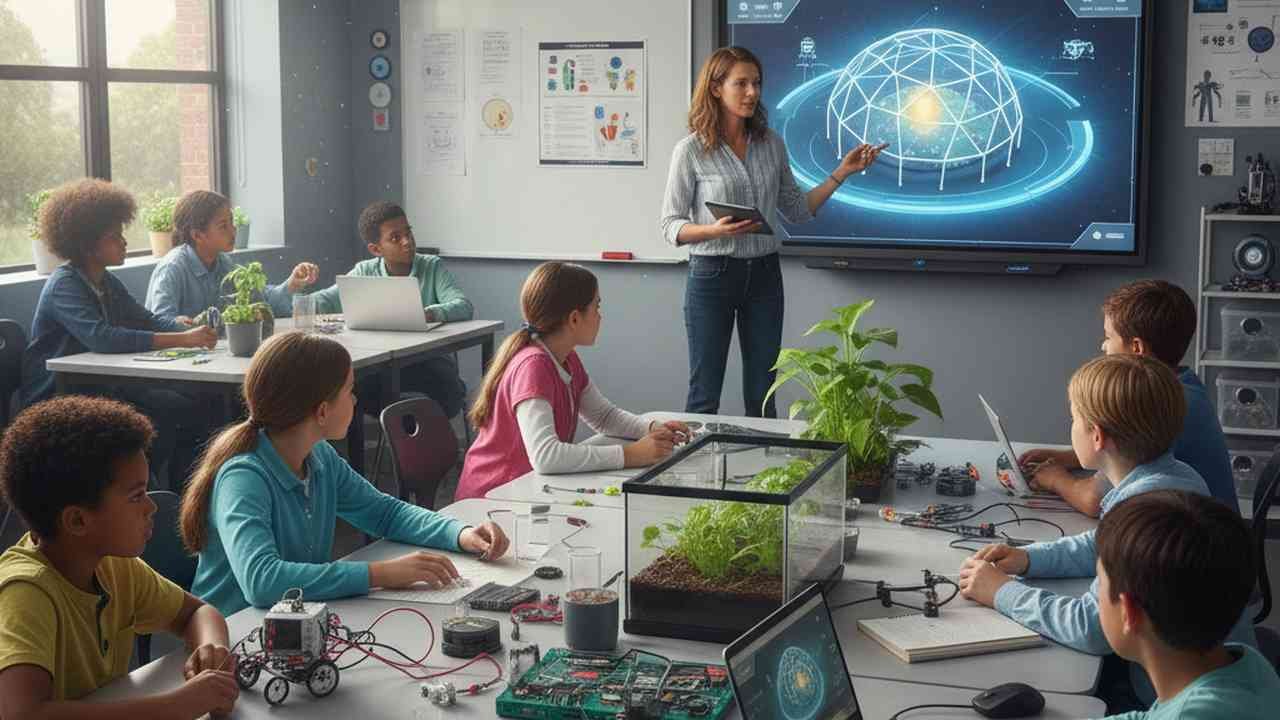
In today’s rapidly evolving educational landscape, the integration of Science, Technology, Engineering, and Mathematics (STEM) disciplines has become paramount. Educators are increasingly recognizing the importance of teaching interdisciplinary STEM concepts to prepare students for the complexities of the modern world. This approach not only enhances critical thinking and problem-solving skills but also fosters a deeper understanding of how these disciplines interconnect in real-world scenarios.
Understanding the Importance of Interdisciplinary STEM Education
Interdisciplinary STEM education transcends traditional subject boundaries, encouraging students to make connections between science, technology, engineering, and mathematics. This holistic approach mirrors the interconnectedness of these fields in the real world, where challenges often require multifaceted solutions. By engaging students in projects that integrate multiple disciplines, educators can cultivate a learning environment that promotes innovation and creativity.
For instance, a project that involves designing a sustainable energy solution requires knowledge of physics (science), programming (technology), structural design (engineering), and data analysis (mathematics). Such projects not only make learning more relevant but also demonstrate the practical applications of STEM concepts. Students are more likely to be motivated and engaged when they see the real-world implications of their studies.
Designing Effective Interdisciplinary STEM Projects
Designing interdisciplinary STEM projects requires careful planning and collaboration among educators from different disciplines. The key is to identify a central theme or problem that can be explored from various disciplinary perspectives. This theme should be relevant, challenging, and engaging to students.
Once the central theme is established, educators can develop a project plan that outlines the objectives, resources, timeline, and assessment methods. It’s essential to incorporate hands-on activities and real-world scenarios to make the learning experience more immersive. For example, building a model of a sustainable city can involve tasks such as conducting environmental impact assessments, designing energy-efficient buildings, and analyzing data to optimize resource usage.
Collaboration among students is another critical component of interdisciplinary projects. Working in teams allows students to share ideas, solve problems collectively, and learn from each other’s strengths. This collaborative approach mirrors the teamwork often required in professional STEM fields and helps students develop essential skills such as communication, leadership, and conflict resolution.
Incorporating Technology to Enhance Learning
Technology plays a pivotal role in modern STEM education. It provides students with tools to explore, create, and innovate in ways that were previously unimaginable. Incorporating technology into interdisciplinary STEM projects can enhance learning by providing access to a wealth of information, simulations, and modeling software.
For example, using computer-aided design (CAD) software allows students to design and test prototypes digitally before constructing physical models. Similarly, data analysis tools enable students to collect, analyze, and interpret data efficiently, fostering a deeper understanding of mathematical concepts. Virtual labs and simulations can also provide students with experiences that might be logistically or financially prohibitive in a traditional classroom setting.
Moreover, technology facilitates personalized learning. Adaptive learning platforms can cater to individual student needs, providing tailored resources and assessments. This personalized approach ensures that all students can progress at their own pace, reinforcing their understanding of interdisciplinary STEM concepts.
Assessment Strategies for Interdisciplinary STEM Learning
Assessing interdisciplinary STEM learning requires a shift from traditional testing methods to more comprehensive evaluation techniques. It’s essential to assess not only the knowledge students acquire but also the skills they develop throughout the project.
Formative assessments, such as quizzes, peer reviews, and self-assessments, can provide ongoing feedback and help identify areas where students may need additional support. Summative assessments, including final projects and presentations, allow students to demonstrate their understanding and application of interdisciplinary concepts.
Rubrics are valuable tools for assessing interdisciplinary projects. They provide clear criteria for evaluating various aspects of the project, including research, design, collaboration, and presentation. Rubrics also promote transparency and consistency in grading, ensuring that students understand the expectations and can strive to meet them.
Creating a Collaborative Learning Environment
A collaborative learning environment is crucial for the success of interdisciplinary STEM education. Such an environment encourages students to engage actively with the material, share ideas, and work together towards common goals.
Establishing a classroom culture that values collaboration involves setting clear expectations for behavior, communication, and teamwork. It’s important to create an atmosphere where students feel comfortable expressing their ideas and taking risks. Teachers can facilitate collaboration by organizing group activities, discussions, and peer feedback sessions.
Additionally, fostering relationships with professionals in STEM fields can enrich the learning experience. Guest speakers, field trips, and mentorship programs provide students with insights into real-world applications of STEM concepts and inspire them to pursue careers in these fields.
Overcoming Challenges in Interdisciplinary STEM Education
Implementing interdisciplinary STEM education comes with its challenges. One significant hurdle is the need for teachers to be proficient in multiple disciplines. Professional development opportunities, such as workshops and collaborative planning sessions, can help educators build the necessary skills and knowledge.
Another challenge is the time and resources required to design and implement interdisciplinary projects. Schools can address this by seeking partnerships with local businesses, universities, and community organizations that can provide expertise, materials, and funding.
Curriculum alignment is also a critical consideration. Educators must ensure that interdisciplinary projects align with educational standards and learning objectives. This alignment ensures that students meet the required competencies while engaging in meaningful, real-world learning experiences.
Engaging Students Through Real-World Applications
Students are more likely to be engaged in their learning when they see the relevance of what they’re studying. Incorporating real-world applications into interdisciplinary STEM projects helps students understand the impact of their learning on society and the environment.
For instance, a project that involves designing a water filtration system for a community in need allows students to apply scientific principles, engineering design, and mathematical calculations to solve a pressing global issue. Such projects not only enhance learning but also instill a sense of social responsibility and ethical consideration.
Real-world applications also provide opportunities for students to develop critical thinking and problem-solving skills. They learn to analyze complex issues, consider multiple perspectives, and devise innovative solutions. These experiences prepare students for the challenges they will face in their future careers and as informed citizens.
Promoting Diversity and Inclusion in STEM Education
Promoting diversity and inclusion in STEM education is essential for creating equitable learning opportunities. It’s important to ensure that all students, regardless of their background, have access to quality STEM education and the support they need to succeed.
Teachers can promote diversity and inclusion by implementing inclusive teaching practices, such as differentiating instruction, providing diverse learning materials, and fostering an inclusive classroom environment. It’s also crucial to challenge stereotypes and biases that may discourage students from pursuing STEM fields.
Mentorship programs and role models play a significant role in promoting diversity in STEM. Students benefit from seeing individuals who look like them succeeding in STEM careers. These role models can inspire students and provide guidance and encouragement as they navigate their educational and career paths.
Conclusion: The Future of Interdisciplinary STEM Education
The future of education lies in the integration of disciplines, fostering a holistic approach to learning that mirrors the interconnectedness of the real world. Interdisciplinary STEM education equips students with the skills and knowledge necessary to tackle complex global challenges and thrive in an increasingly technological society.
By embracing interdisciplinary teaching strategies, educators can create dynamic learning environments that inspire innovation, collaboration, and critical thinking. As we move forward, it’s essential to continue exploring and implementing effective strategies for teaching interdisciplinary STEM concepts, ensuring that all students have the opportunity to succeed and make meaningful contributions to society.
