


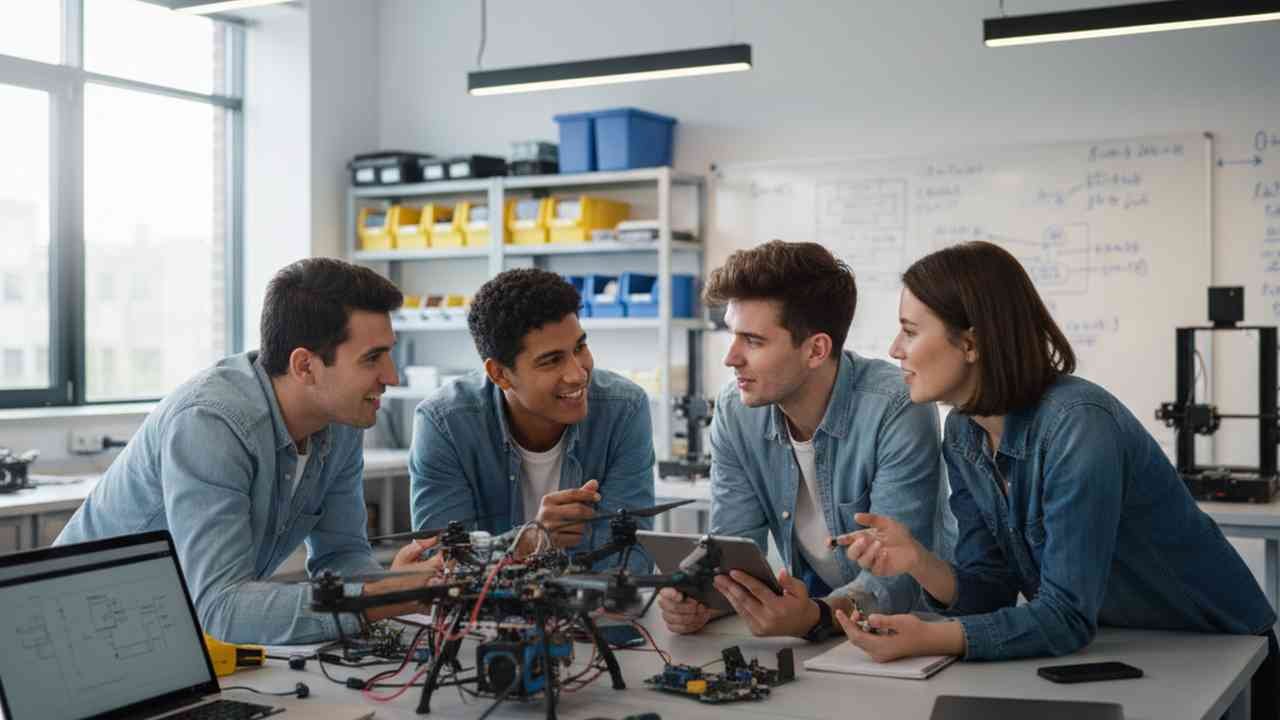
In the fast-paced, ever-evolving landscape of modern education, the traditional methods of teaching are rapidly becoming obsolete. The world is shifting towards a more interconnected, collaborative, and dynamic approach to learning. At the forefront of this transformation are collaborative STEM (Science, Technology, Engineering, and Mathematics) projects. These initiatives are not just about imparting technical knowledge; they are about fostering essential life skills that students will carry with them into their futures. One of the most significant benefits of these projects is the enhancement of communication and teamwork abilities, which are increasingly vital in today’s globalized world. Through the lens of generational education, collaborative STEM projects offer a unique opportunity to bridge gaps between different age groups, fostering a culture of shared learning and mutual respect.
The Power of Collaborative Learning in STEM
Collaborative learning in STEM is more than just group work; it’s a strategic approach that integrates teamwork into the very fabric of the learning process. When students engage in collaborative STEM projects, they are not merely completing tasks – they are communicating, negotiating, and problem-solving together. This collaborative environment mirrors real-world scenarios where teamwork and communication are paramount. Research has shown that such collaborative settings lead to higher student achievement, improved critical thinking, and stronger communication abilities. By working together, students learn to articulate their ideas clearly, listen actively, and respect diverse perspectives, all of which are crucial skills in both academic and professional settings.
Enhancing Communication Skills Through Collaboration
Effective communication is the cornerstone of successful teamwork. In collaborative STEM projects, students are required to express their ideas, explain complex concepts, and provide constructive feedback to their peers. This constant exchange hones their verbal and written communication skills, making them more adept at conveying information in various contexts. Moreover, the collaborative nature of these projects encourages students to adapt their communication styles to suit different audiences, fostering versatility and clarity. As students navigate through challenges and share solutions, they develop a deeper understanding of the importance of clear and concise communication in achieving common goals.
Building Teamwork Abilities for the Future
Teamwork is an indispensable skill in the modern workforce. Collaborative STEM projects provide students with the opportunity to work in diverse teams, where they can learn to delegate tasks, manage conflicts, and support one another towards a shared objective. These experiences cultivate a sense of responsibility and accountability, as each member’s contribution is vital to the team’s success. Through collaboration, students develop empathy, patience, and resilience – qualities that are essential for effective teamwork. As they face and overcome challenges together, they build trust and camaraderie, laying the foundation for strong professional relationships in the future.
Fostering Generational Education Through Collaborative Projects
Generational education emphasizes the value of learning across different age groups, promoting the exchange of knowledge and experiences between generations. Collaborative STEM projects offer a unique platform for this intergenerational learning. By involving students from various age groups, these projects facilitate mentorship and knowledge sharing, enriching the learning experience for all participants. Younger students benefit from the guidance and expertise of their older peers, while older students gain fresh perspectives and insights from the younger generation. This reciprocal learning not only enhances academic knowledge but also fosters mutual respect and understanding between generations, preparing students to thrive in a diverse and interconnected world.
Real-World Applications and Career Readiness
The skills developed through collaborative STEM projects are directly applicable to real-world scenarios. In industries such as technology, engineering, and healthcare, professionals often work in teams to solve complex problems and innovate solutions. The ability to communicate effectively, collaborate seamlessly, and approach challenges with a problem-solving mindset are highly sought-after traits in these fields. By engaging in collaborative STEM projects, students gain practical experience that prepares them for the demands of the modern workforce. They learn to navigate the complexities of teamwork, adapt to diverse working styles, and contribute meaningfully to collective goals, all of which are crucial for career success.
Integrating Technology to Enhance Collaboration
In today’s digital age, technology plays a pivotal role in facilitating collaboration. Tools such as video conferencing, collaborative software, and online project management platforms enable students to work together seamlessly, regardless of geographical barriers. These technologies not only enhance communication but also introduce students to the digital tools and platforms commonly used in professional settings. By integrating technology into collaborative STEM projects, students develop digital literacy and become adept at using various tools to collaborate effectively. This technological proficiency is essential for success in the increasingly digital and interconnected world.
Overcoming Challenges in Collaborative STEM Projects
While collaborative STEM projects offer numerous benefits, they also present challenges that require careful management. Differences in communication styles, conflicting ideas, and varying levels of commitment can create obstacles to effective collaboration. However, these challenges also provide valuable learning opportunities. By navigating these issues, students develop problem-solving skills, learn to manage conflicts constructively, and enhance their emotional intelligence. Educators play a crucial role in guiding students through these challenges, providing support and strategies to foster positive collaboration. Through these experiences, students learn that challenges are an inherent part of teamwork and that overcoming them leads to personal and collective growth.
The Future of Collaborative STEM Education
The landscape of education is continually evolving, and collaborative STEM projects are at the forefront of this transformation. As the demand for skills such as communication, teamwork, and problem-solving increases, the importance of collaborative learning becomes more pronounced. Educational institutions are recognizing the value of these projects and are integrating them into curricula to better prepare students for the future. By embracing collaborative STEM education, schools are not only enhancing academic knowledge but also equipping students with the essential skills needed to navigate and succeed in a complex and rapidly changing world.
If you want to enhance your teaching strategies, consider the impact of higher education ads that promote innovative coding programs designed for K-12 students.
To learn more about enhancing student engagement and learning efficacy, explore the importance education essay that highlights innovative methods for integrating technology into STEM education.
To learn more about enhancing your teaching methods, consider exploring how effective strategies can transform your classroom dynamics, especially in relation to judge mathis education and interdisciplinary STEM concepts.
If you want to enhance your curriculum with innovative strategies, explore lo bosworth education that empowers students to think critically and solve problems effectively.
