


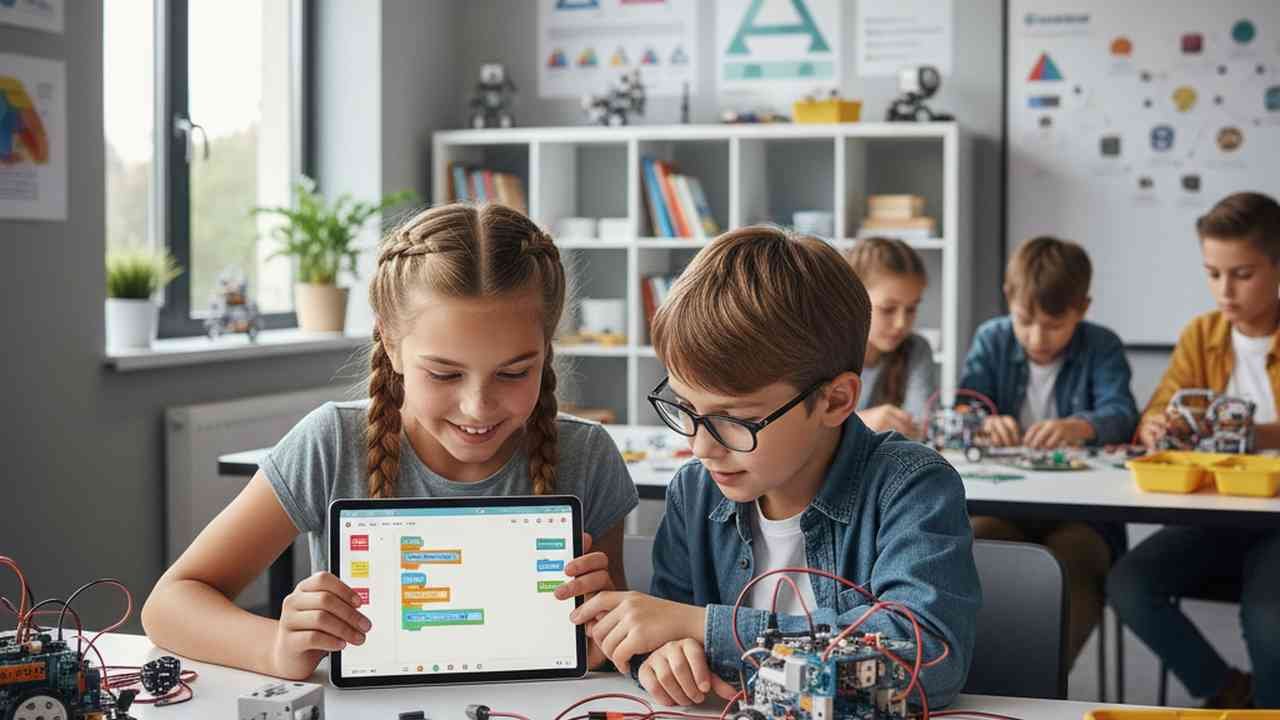
In a world that thrives on innovation and technological advancement, the ability to think critically and solve complex problems is more crucial than ever. Enter robotics and coding kits – dynamic educational tools that are revolutionizing the way we approach learning. These kits are not just toys; they are gateways to developing essential skills that will shape the leaders of tomorrow. If you’re not already incorporating them into your educational journey, you’re missing out on a transformative experience that could set you apart in an increasingly competitive world.
The Surge of Robotics and Coding Kits in Education
Over the past decade, robotics and coding kits have transitioned from niche educational tools to mainstream essentials in classrooms worldwide. Their rise is a testament to their effectiveness in engaging students and fostering a deep understanding of STEM (Science, Technology, Engineering, and Mathematics) concepts. These kits provide hands-on experiences that bridge the gap between theoretical knowledge and practical application, making learning both fun and impactful.
Institutions like North Nova Education have been at the forefront of this movement, integrating robotics and coding into their curricula to enhance problem-solving and logical thinking among students. By incorporating these tools, educators are witnessing firsthand the profound impact on student engagement and comprehension. The tactile nature of building and programming robots allows students to visualize abstract concepts, making learning more tangible and accessible.
Unleashing Creativity Through Hands-On Learning
Imagine a classroom where students are not confined to textbooks but are actively constructing robots, writing code, and troubleshooting real-world problems. This is the reality with robotics and coding kits. These kits empower students to take control of their learning, encouraging experimentation and fostering a mindset of innovation.
For instance, a student might begin by assembling a basic robot using a kit like the LEGO Mindstorms or Makeblock mBot. As they progress, they write code to control the robot’s movements, sensors, and responses to environmental stimuli. This process not only reinforces coding skills but also enhances spatial awareness, logical reasoning, and problem-solving abilities. The iterative nature of building and refining robots teaches students the value of persistence and adaptability – key components of creative thinking.
Building Blocks of Logical Thinking
At the heart of robotics and coding lies logic. Every movement a robot makes, every sensor it activates, and every response it gives is the result of logical instructions provided by the programmer. By engaging with these kits, students learn to break down complex problems into manageable parts, a skill known as decomposition. This approach mirrors the problem-solving strategies used in real-life scenarios, from engineering challenges to everyday tasks.
Moreover, coding introduces students to the concept of algorithms – step-by-step procedures for solving problems. Understanding algorithms is fundamental not only in computer science but also in various fields such as mathematics, engineering, and even social sciences. As students write and debug code, they develop a structured approach to problem-solving that is both systematic and efficient.
Enhancing Collaboration and Communication Skills
Robotics projects often require teamwork, as students collaborate to design, build, and program their robots. This collaborative environment mirrors real-world work settings, where teamwork and communication are essential. Through group projects, students learn to share ideas, delegate tasks, and integrate diverse perspectives to achieve a common goal.
Institutions like North Nova Education recognize the importance of these soft skills and have designed their robotics programs to include collaborative projects. These initiatives not only teach technical skills but also emphasize the value of effective communication and teamwork. As students work together, they develop interpersonal skills that are crucial for success in both academic and professional settings.
Preparing for Future Careers in STEM
The demand for professionals in STEM fields is rapidly increasing. By engaging with robotics and coding kits, students gain early exposure to concepts and skills that are directly applicable in these industries. Whether it’s programming autonomous vehicles, designing smart cities, or developing artificial intelligence, the foundational knowledge gained through these kits provides a stepping stone to advanced studies and careers in technology and engineering.
North Nova Education’s commitment to integrating robotics into their curriculum ensures that students are not only consumers of technology but also creators. This proactive approach equips students with the skills and confidence to pursue careers in STEM fields, contributing to a future driven by innovation and technological advancement.
Real-World Applications and Problem-Solving
One of the most compelling aspects of robotics and coding kits is their ability to simulate real-world problems. Students are tasked with designing robots to perform specific functions, such as navigating a maze, sorting objects, or responding to environmental changes. These challenges require students to apply their knowledge creatively and critically, mirroring the problem-solving processes used in various industries.
For example, a student might be asked to program a robot to sort colored balls into corresponding bins. This task involves understanding sensor inputs, programming conditional statements, and testing the robot’s performance. Through this process, students learn to identify problems, hypothesize solutions, test their ideas, and refine their approaches – skills that are invaluable in any field.
Accessibility and Affordability of Robotics Kits
While robotics kits were once considered expensive and inaccessible, advancements in technology have made them more affordable and widely available. Kits like the Avishkaar Robotics Starter Kit offer a comprehensive learning experience at a fraction of the cost of traditional educational tools. These kits include all necessary components and instructions, making it easy for students and educators to get started without significant financial investment.
Furthermore, online platforms and resources provide tutorials, forums, and support, ensuring that learners have access to guidance and assistance as they explore the world of robotics. This accessibility democratizes learning, allowing students from diverse backgrounds to engage with and benefit from STEM education.
Integrating Robotics into the Classroom Curriculum
Incorporating robotics into the classroom requires thoughtful planning and integration into the existing curriculum. Educators must align robotics projects with learning objectives, ensuring that students gain both technical skills and a deeper understanding of the subject matter. This integration can enhance lessons in mathematics, science, and engineering, providing a practical application for theoretical concepts.
North Nova Education exemplifies this integration by embedding robotics into their curriculum across various grade levels. By aligning robotics projects with academic standards, they ensure that students not only learn how to build and program robots but also understand the underlying principles and concepts. This holistic approach enriches the learning experience and reinforces the relevance of STEM education in everyday life.
The Future of Robotics in Education
The future of education is undoubtedly intertwined with robotics and coding. As technology continues to evolve, so too will the tools and methods used to teach and learn. Robotics kits will become more advanced, incorporating artificial intelligence, machine learning, and other cutting-edge technologies. These advancements will provide students with even more opportunities to explore, create, and innovate.
Institutions like North Nova Education are leading the way in embracing these technologies, preparing students for a future where adaptability and technological proficiency are paramount. By staying at the forefront of educational innovation, they ensure that their students are equipped with the skills and knowledge to thrive in an ever-changing world.
