


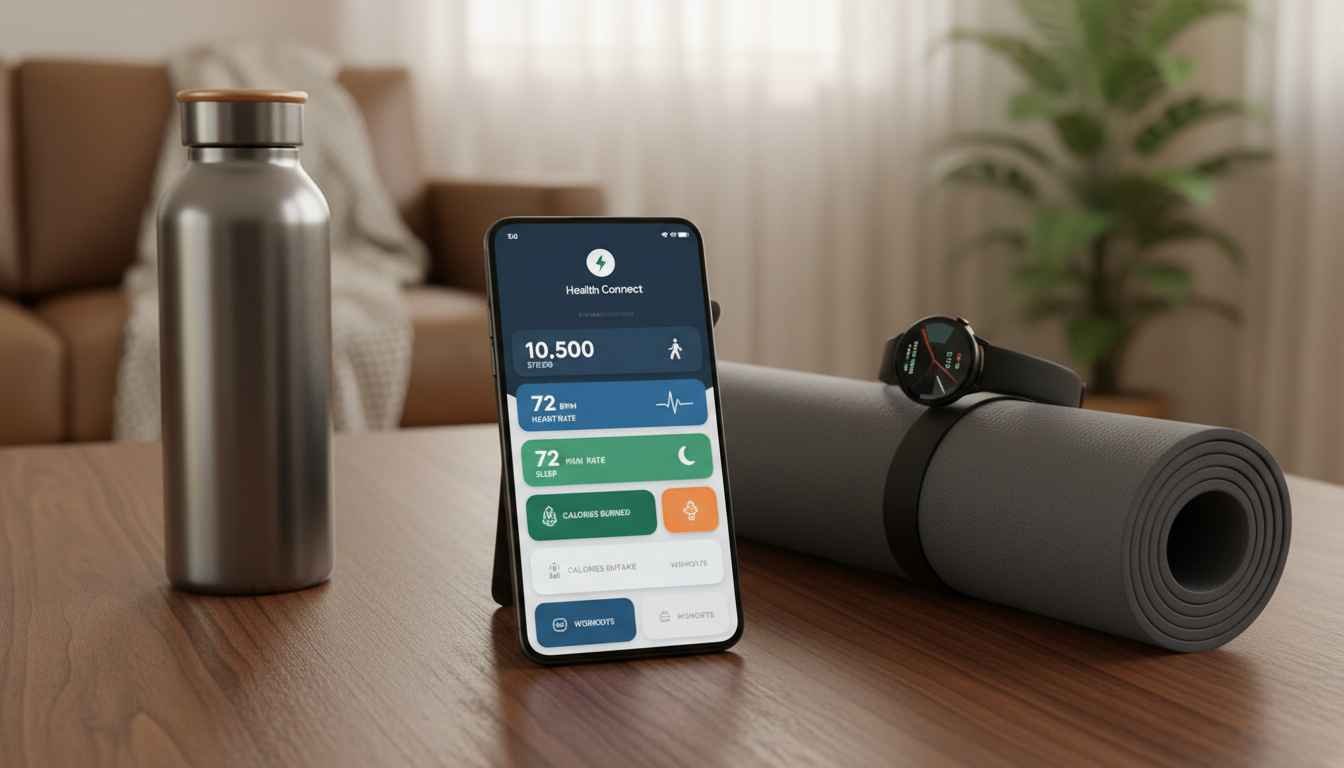
Stop relying solely on Google Fit immediately. The world of digital health tracking is evolving rapidly, and if you are still trusting only one platform to monitor your wellness, you might be missing out on features that could significantly improve your daily health routines. Health Connect, developed by Google, is emerging as a central hub designed to unify data from multiple health and fitness apps, making it a potential game-changer for anyone serious about tracking their wellbeing.
For years, Google Fit served as the go-to application for tracking steps, heart rate, sleep, and basic activity metrics. While it offered simplicity and integration with Android devices, it lacked the depth and versatility many users now demand. Health Connect aims to bridge this gap by consolidating data across multiple apps, ensuring that you don’t have to manually manage your health information across different platforms.
Pros of Health Connect Over Google Fit
Centralized Data Management: Health Connect allows multiple fitness and wellness apps to share and access health data in one secure location. Unlike Google Fit, where your data often remains siloed, this centralized system ensures you have a comprehensive view of your wellness metrics, from sleep quality to nutrition and exercise patterns.
Enhanced Privacy and Security: Google emphasizes that Health Connect prioritizes user privacy. Each app must request explicit permissions to read or write data, which reduces the risk of unauthorized access. I personally underestimated this in the past, syncing my sleep data with several apps without realizing some had minimal privacy safeguards, which led to a cluttered and confusing data trail.
Broader Device Compatibility: While Google Fit primarily connects to Android devices, Health Connect is designed with interoperability in mind. Many third-party apps and devices, including smart scales, heart rate monitors, and fitness trackers, can now feed data seamlessly into one hub, reducing the friction for users managing multiple devices.
Future-Ready Ecosystem: By standardizing data storage and sharing protocols, Health Connect sets a foundation for advanced analytics, AI-driven insights, and predictive health features. This offers a more future-proof system compared to Google Fit, which has remained relatively static in terms of innovation.
Better App Collaboration: Apps that once operated in isolation can now collaborate. For example, a nutrition tracking app can use your activity data to suggest more precise calorie intake, while a sleep app can access your exercise data to analyze correlations between physical activity and sleep quality. This integration enables more actionable insights than Google Fit alone.
Cons and Potential Drawbacks
Limited User Adoption: Despite its benefits, Health Connect is relatively new, and many popular apps have yet to integrate fully. This means early adopters may experience gaps in their data, which can lead to incomplete health tracking experiences compared to the established Google Fit ecosystem.
Learning Curve: Transitioning to Health Connect may require users to reconfigure multiple apps and adjust settings to allow data sharing. For someone accustomed to the simplicity of Google Fit, this process can feel cumbersome and confusing at first.
Dependency on Android Ecosystem: Health Connect is heavily integrated into Android devices. If you use iOS or multiple operating systems, syncing your data across platforms may still be limited, making Google Fit a more practical choice for cross-platform users at this time.
Potential Data Overload: The centralization of all health data is powerful but can also be overwhelming. Without proper filtering and prioritization, users may find themselves buried under metrics, reducing the clarity and usefulness of the insights. I made this mistake when I first started tracking all available metrics at once, leading to unnecessary stress and confusion about which data truly mattered for my wellness goals.
Time & Cost Estimate
Setting up Health Connect can take anywhere from 30 minutes to 2 hours depending on the number of apps you intend to integrate. The process itself is free, but some apps that feed data into Health Connect may require subscription plans ranging from $5 to $15 per month. Investing this time upfront ensures a smoother, long-term health tracking experience that consolidates your metrics efficiently.
Who Should Avoid This
Health Connect is not ideal for users who prefer minimal interaction with health apps or who are satisfied with a single-platform solution like Google Fit. Individuals with privacy concerns who do not want to manage multiple permissions may also find the platform cumbersome. Lastly, iOS-exclusive users or those using devices outside the Android ecosystem may experience limited functionality and should carefully consider whether adopting Health Connect provides tangible benefits.
Conclusion
While Health Connect is not an outright replacement for Google Fit in the traditional sense, it represents a significant evolution in health data management. For users seeking a unified, secure, and future-proof wellness tracking system, it offers clear advantages in data integration, privacy, and actionable insights. However, adopting it requires effort, awareness of potential data overload, and attention to device compatibility. My experience transitioning from Google Fit taught me that relying solely on a single app limits the depth of health insights and can lead to confusion when multiple metrics are scattered across different platforms. Integrating Health Connect strategically, while selectively sharing data from trusted apps, provides a smarter, more comprehensive approach to digital wellness.
For those interested in enhancing overall health and wellness routines beyond digital tracking, pairing Health Connect insights with practical lifestyle tools, such as natural sleep aids and stress reduction products from Bearaby®, can create a holistic approach to better sleep and overall well-being.
