


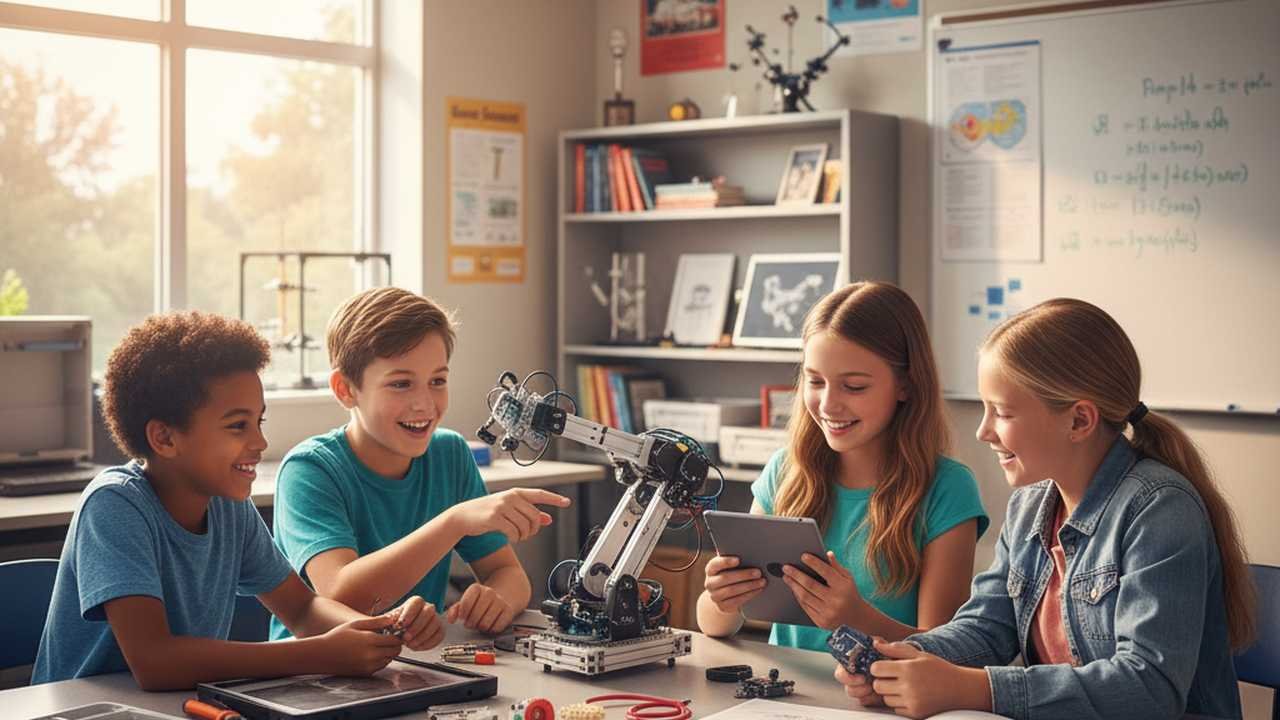
Imagine a classroom where students are not merely recipients of information but active participants in their own learning journey. Picture them huddled together, engrossed in assembling a solar-powered car, their faces lit with excitement as gears click into place and circuits come alive. This is the transformative power of project-based STEM kits – a dynamic approach that transcends traditional teaching methods and fosters collaboration, critical thinking, and a genuine love for learning.
In today’s rapidly evolving educational landscape, the need for innovative teaching strategies has never been more pressing. Project-based learning (PBL) stands at the forefront of this educational revolution, offering students hands-on experiences that bridge the gap between theoretical knowledge and real-world application. However, the success of PBL hinges on its implementation. Without careful planning and support, educators may fall into the trap of micromanagement in education, stifling student creativity and autonomy. It’s crucial to strike a balance – providing guidance without overshadowing the learners’ initiative.
As we delve deeper into the world of project-based STEM kits, we’ll explore how they serve as catalysts for collaboration and team learning. These kits are more than just a collection of materials; they are gateways to a learning environment where students engage in meaningful projects that challenge their problem-solving skills, encourage teamwork, and ignite their curiosity. The urgency to adopt such methodologies is palpable – schools that hesitate may find themselves lagging behind in preparing students for the complexities of the future workforce.
The Rise of Project-Based Learning in STEM Education
Project-based learning has emerged as a cornerstone of modern STEM education, offering a departure from rote memorization and passive learning. Instead of passively receiving information, students actively engage in projects that require them to apply their knowledge to solve real-world problems. This approach not only enhances understanding but also cultivates essential skills such as critical thinking, collaboration, and communication.
Research underscores the efficacy of PBL in fostering deeper learning experiences. According to a study published in the International Journal of STEM Education, students participating in project-based learning demonstrated improved problem-solving competencies compared to their peers in traditional learning settings. This hands-on approach allows students to connect theoretical concepts with practical applications, making learning more relevant and engaging.
However, the implementation of PBL is not without challenges. Educators must navigate the delicate balance between providing sufficient guidance and avoiding micromanagement in education. Over-involvement can hinder students’ ability to think independently and collaborate effectively. Therefore, it’s imperative for educators to adopt a facilitative role, guiding students through the learning process while allowing them the autonomy to explore and innovate.
Enhancing Collaboration Through Hands-On Projects
Collaboration lies at the heart of project-based learning. When students work together on a shared project, they learn to communicate effectively, delegate tasks, and synthesize diverse perspectives. This collaborative process mirrors real-world scenarios, preparing students for future careers where teamwork is often essential.
Project-based STEM kits provide an ideal platform for fostering collaboration. These kits typically involve tasks that require input from multiple team members, such as designing a model bridge or programming a robot. As students collaborate, they encounter challenges that necessitate collective problem-solving, thereby strengthening their teamwork skills.
Moreover, working in teams allows students to learn from one another, enhancing their understanding of the subject matter. Peer teaching becomes an invaluable tool, as students explain concepts to each other in ways that resonate with their shared experiences. This peer-to-peer learning not only reinforces knowledge but also builds a sense of community within the classroom.
However, to maximize the benefits of collaboration, it’s essential to avoid micromanagement in education. Teachers should provide clear objectives and support while allowing students the freedom to navigate their projects. This approach fosters a sense of ownership and accountability, motivating students to invest fully in their learning experiences.
Bridging the Gap Between Theory and Practice
One of the most compelling advantages of project-based STEM kits is their ability to bridge the gap between theoretical knowledge and practical application. In traditional classroom settings, students often struggle to see the relevance of abstract concepts. Project-based learning addresses this by placing students in situations where they must apply their knowledge to solve tangible problems.
For instance, when students design and build a simple circuit using a STEM kit, they not only learn about electrical principles but also understand how these principles are utilized in everyday technology. This experiential learning deepens their comprehension and makes abstract concepts more accessible.
Additionally, project-based learning encourages students to engage in iterative processes – designing, testing, and refining their projects. This cycle mirrors real-world engineering practices, where prototypes undergo multiple revisions before reaching their final form. Such experiences cultivate resilience and adaptability, qualities that are invaluable in both academic and professional settings.
Nevertheless, educators must be mindful of the potential for micromanagement in education. While guidance is necessary, it’s crucial to allow students the space to experiment and learn from their mistakes. This autonomy fosters a growth mindset, encouraging students to view challenges as opportunities for learning rather than obstacles to success.
Developing Critical 21st-Century Skills
In today’s fast-paced, technology-driven world, the demand for critical 21st-century skills has escalated. Employers seek individuals who possess not only technical expertise but also the ability to think critically, solve complex problems, and collaborate effectively. Project-based STEM kits play a pivotal role in cultivating these skills.
Through hands-on projects, students engage in activities that require them to analyze problems, devise solutions, and evaluate outcomes. These experiences hone their critical thinking abilities, enabling them to approach challenges methodically and creatively. Moreover, the collaborative nature of project-based learning enhances communication and teamwork skills, preparing students for the collaborative environments they will encounter in their careers.
Furthermore, project-based learning encourages innovation and entrepreneurship. As students work on projects, they are often tasked with creating original solutions, fostering an entrepreneurial mindset. This emphasis on innovation equips students with the skills necessary to thrive in an ever-evolving job market.
However, to fully realize these benefits, educators must avoid micromanagement in education. Providing students with the autonomy to explore and innovate is essential for developing critical 21st-century skills. Teachers should serve as facilitators, offering support and guidance while allowing students the freedom to take initiative and ownership of their learning.
Integrating STEM Kits into the Curriculum
Integrating STEM kits into the curriculum requires thoughtful planning and alignment with educational standards. It’s essential to ensure that the projects undertaken with these kits complement and reinforce the concepts taught in the classroom. This integration enhances the coherence of the learning experience and ensures that students can connect their hands-on activities with theoretical knowledge.
Many STEM kits come with comprehensive lesson plans and resources that align with national and international educational standards. These resources assist educators in seamlessly incorporating project-based learning into their existing curricula, saving valuable planning time and ensuring consistency across lessons.
Moreover, integrating STEM kits provides opportunities for interdisciplinary learning. Projects often encompass elements of science, technology, engineering, and mathematics, allowing students to see the interconnectedness of these disciplines. This holistic approach fosters a deeper understanding and appreciation of the subjects.
Nevertheless, educators must be cautious of micromanagement in education. While structured lesson plans are beneficial, it’s important to allow flexibility within the curriculum. Providing students with the freedom to explore and pursue their interests within the framework of the curriculum enhances engagement and fosters a love for learning.
Overcoming Challenges in Implementing Project-Based Learning
Implementing project-based learning is not without its challenges. Educators may encounter obstacles such as limited resources, time constraints, and resistance to change. However, these challenges are not insurmountable and can be addressed with strategic planning and support.
One of the primary concerns is the availability of resources. While STEM kits can be an investment, many organizations offer grants and funding opportunities to support the integration of project-based learning in schools. Additionally, some kits are designed to be cost-effective and reusable, maximizing the value of the investment.
Time constraints also pose a challenge. Project-based learning requires time for planning, execution, and reflection. To accommodate this, educators can integrate projects into existing lesson plans or extend learning beyond the classroom through after-school programs or homework assignments.
Resistance to change is another hurdle. Some educators may be accustomed to traditional teaching methods and may be hesitant to adopt new approaches. Professional development and training can help ease this transition, providing educators with the skills and confidence needed to implement project-based learning effectively.
Throughout this process, it’s crucial to avoid micromanagement in education. Providing educators with the autonomy to adapt and implement project-based learning in ways that suit their unique classroom environments fosters innovation and ensures the success of the initiative.
Preparing Students for Future Success
The ultimate goal of education is to prepare students for success in their future endeavors. Project-based STEM kits equip students with the skills and experiences necessary to navigate the complexities of the modern world. By engaging in hands-on projects, students develop problem-solving abilities, critical thinking skills, and a collaborative mindset – qualities that are highly valued in today’s job market.
Moreover, these kits inspire a passion for learning and discovery. As students engage in projects that pique their interests, they develop a sense of curiosity and a desire to explore further. This intrinsic motivation drives lifelong learning and personal growth.
Furthermore, project-based learning encourages students to take ownership of their learning journey. By actively participating in projects, students become self-directed learners, capable of setting goals, seeking resources, and reflecting on their progress. This autonomy fosters confidence and a sense of responsibility, preparing students for the challenges and opportunities they will encounter in their careers and personal lives.
In conclusion, the adoption of project-based STEM kits is not merely an educational trend but a necessity in preparing students for the future. Schools that embrace this approach position their students for success, equipping them with the skills and experiences needed to thrive in an ever-evolving world. The time to act is now – don’t let your students miss out on the transformative power of project-based learning.
If you want to see how hands-on learning can transform young minds, North Nova Education offers innovative robotics and coding kits that enhance problem-solving skills and logical thinking.
If you believe that education should be inclusive and innovative, exploring perverted-education can inspire you to create engaging STEM projects for all learners.
This topic connects naturally with Best Places To Stay — exploring it will give you a more complete picture.
As you consider innovative educational approaches, don’t forget the importance of experiential learning outside the classroom; for instance, visiting the best places to visit in Ohio in winter can provide students with enriching experiences that complement their project-based learning journey.
